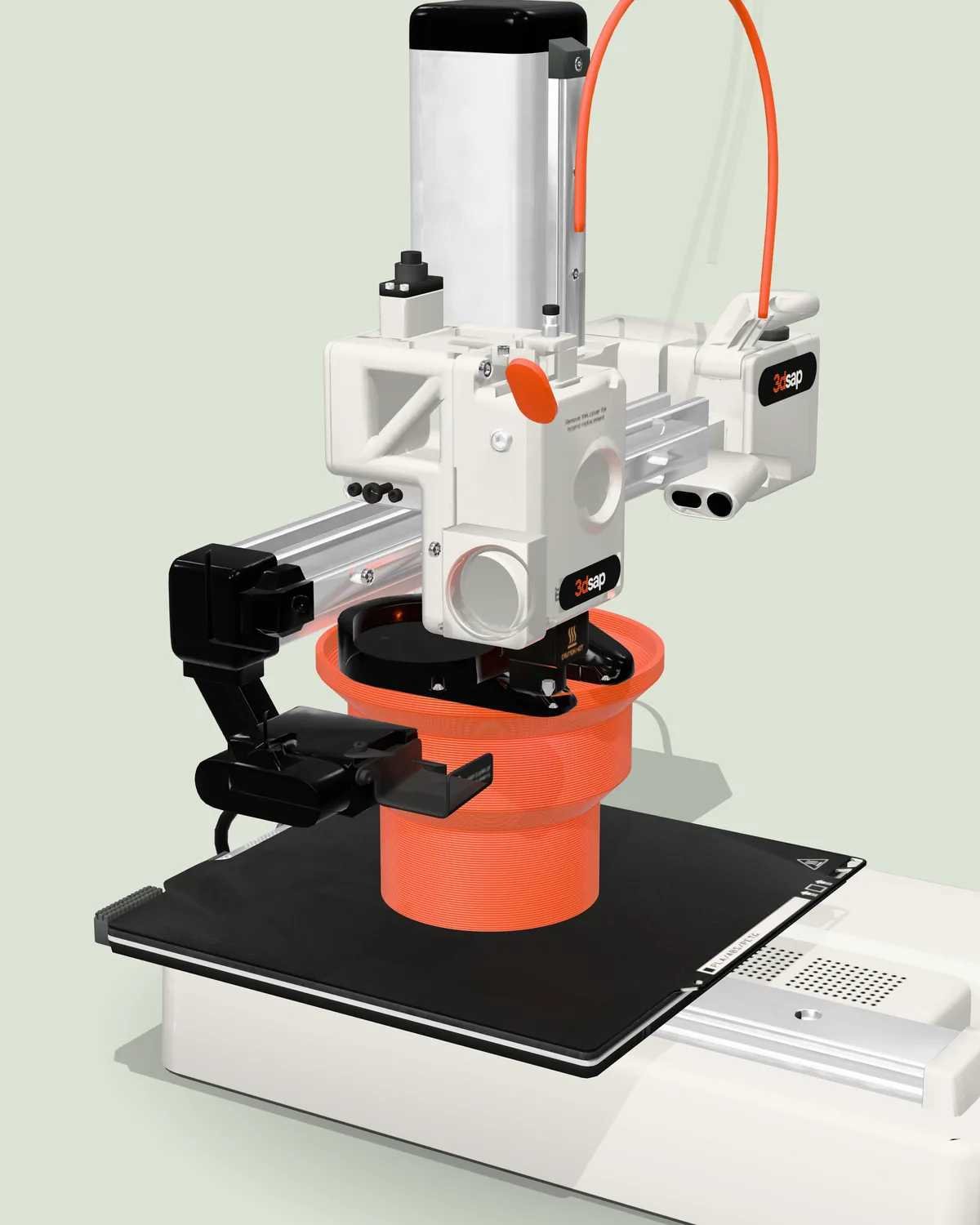
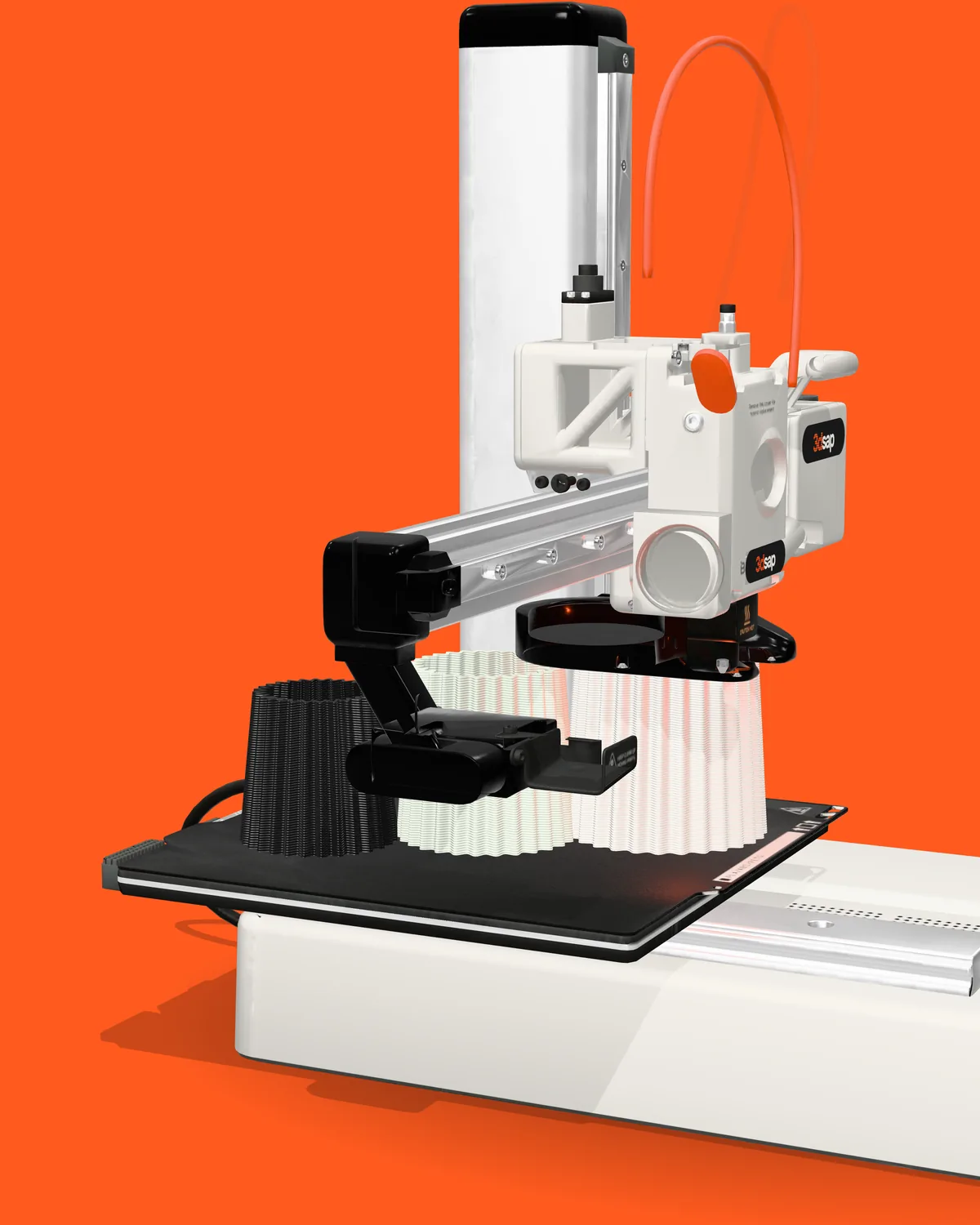
How much a 3D printer costs: buy one or order 3D printing
Euro prices for the two printers we print on, what filament, power and upkeep cost, and when it is simpler to order the object itself.
Read the article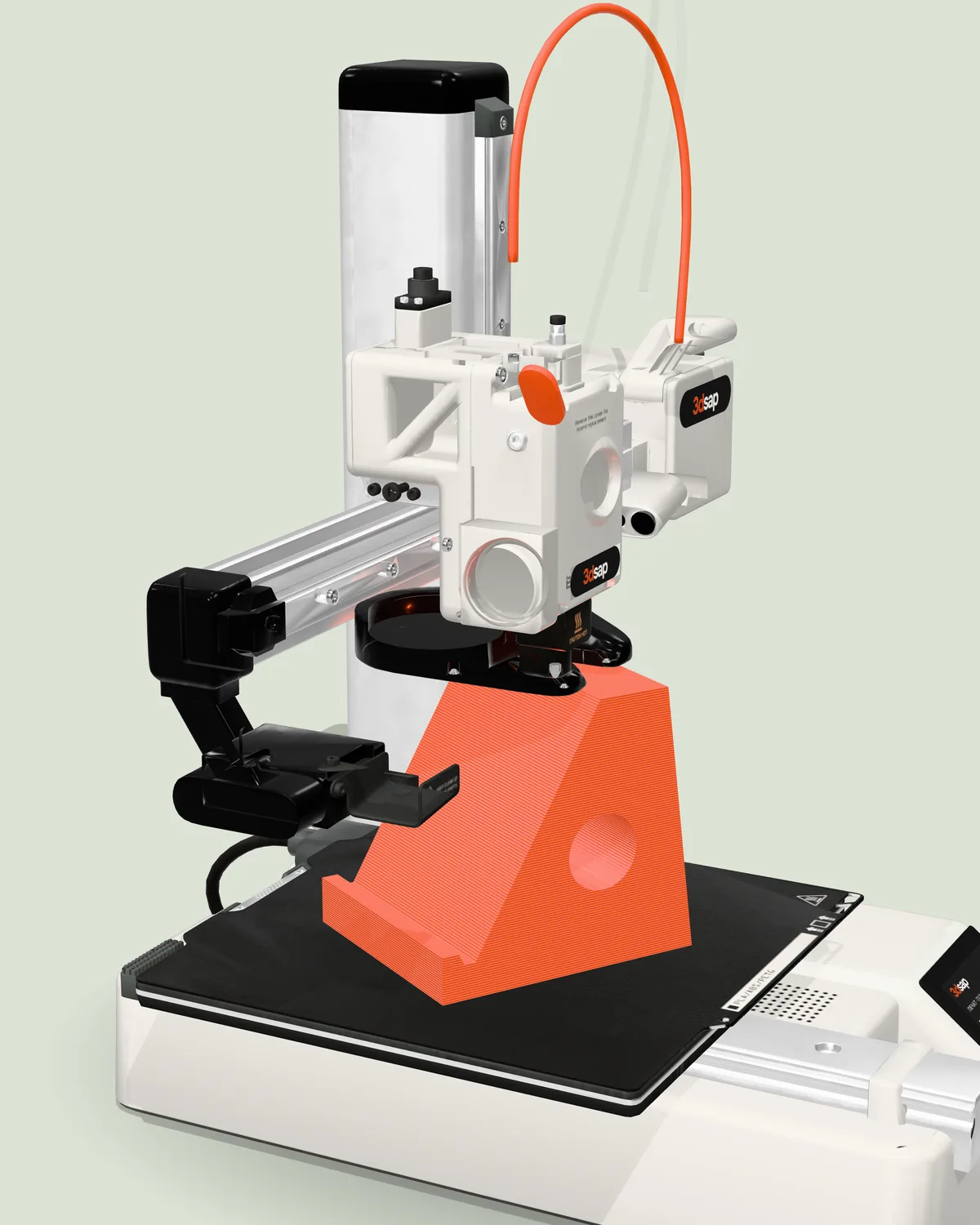
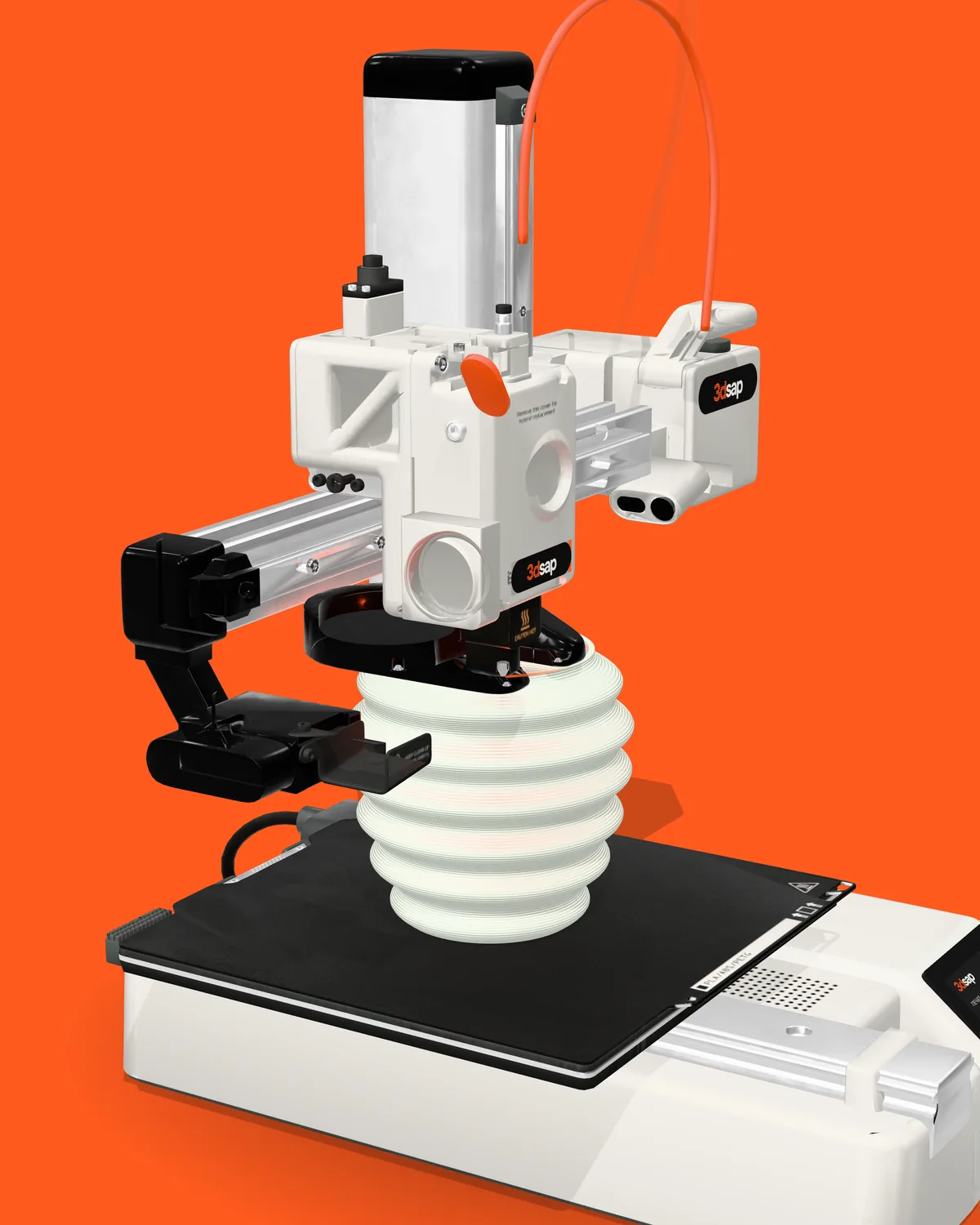
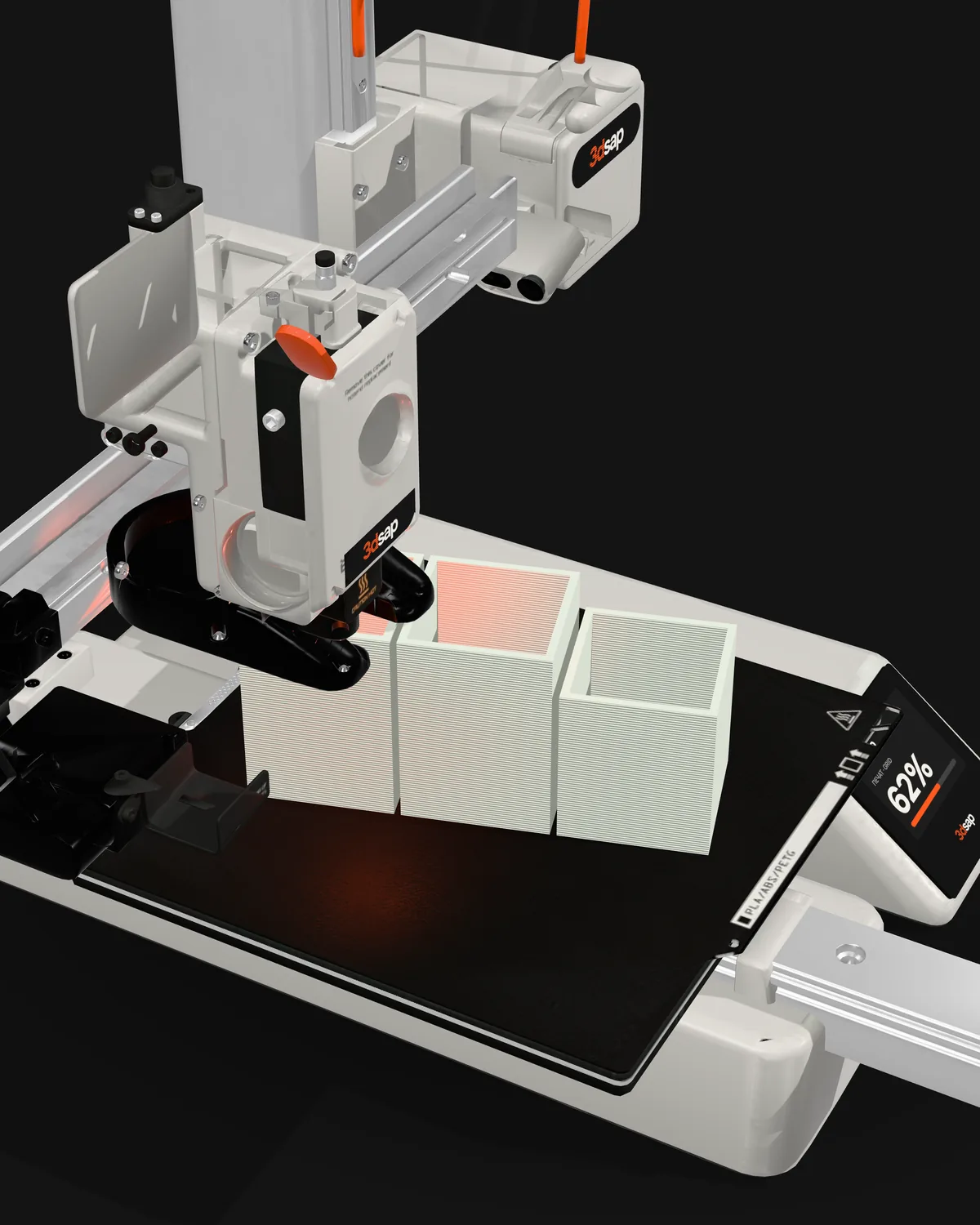
The slicer sets the walls and layers, and the printer lays them down line by line. Whether a 3D printed vase holds water depends mostly on the walls and the seam.
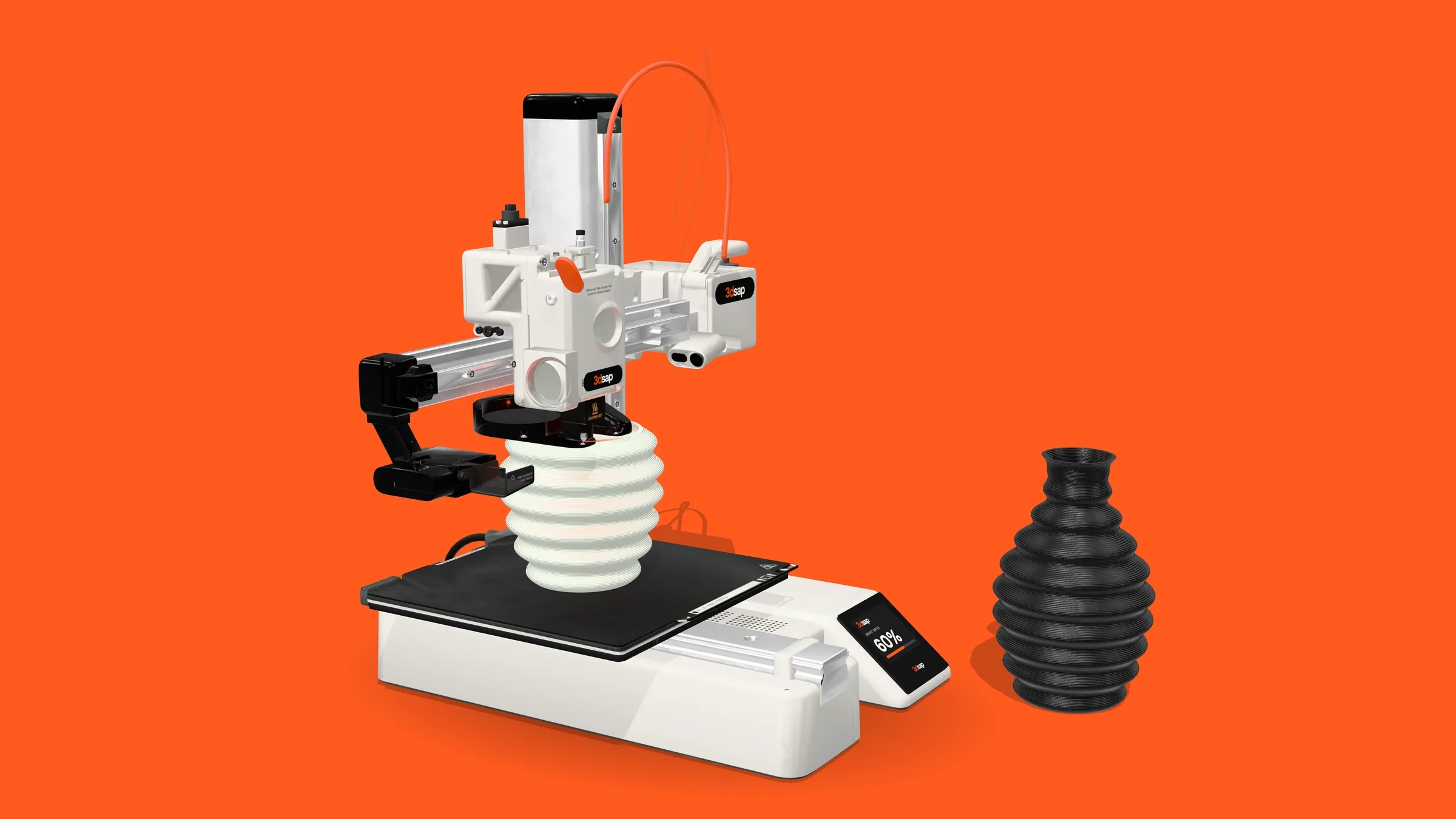
Here is how a 3D printer works, shown with one object: the Ripple vase, from the file to the last layer. You’ll also see why the vase has lines, whether a 3D printed vase can hold water and how PETG handles the sun.
It all starts with a file: a 3D model in STL, OBJ or 3MF format. The printer can’t print the model as it is. First a program called a slicer cuts it into horizontal 0.2 mm layers and works out the nozzle’s path for each layer.
In the slicer we also set up the object and the material:
If part of the model hangs in the air, the slicer also adds supports: temporary columns that we remove after printing.
For a vase, the slicer adds no infill and no top layers: the vase is hollow and open at the top, so only the bottom and the wall remain. The number of lines in the wall largely decides whether a 3D printed vase can hold water (more on that below).
No file?
A ready-made model of a vase, a stand or a spare part is often available in libraries such as Printables and MakerWorld. You can draw a simple shape yourself in a free program such as Tinkercad, and a designer can help with a more complex one. Then you send us the file to print. More on this: where to get a 3D model of a broken part.
To see what each part of a 3D printer does, follow the plastic from the spool to the vase:
The first layer matters most: it has to stick well to the plate, or the object can come loose mid-print. After that, a fan next to the nozzle cools each fresh line so it sets before the next layer goes on top.
We print on two Bambu Lab printers: the A1 and the A1 mini. On both, the plate moves front to back and the nozzle moves left to right. When a layer is done, the nozzle rises by 0.2 mm and starts the next one on top. That is how the whole vase grows: if it is 10 cm tall, that makes 500 layers.
The A1 mini is paired with an AMS lite: a unit for four spools that switches the filament during a print. That way one object can have up to four colors.
The printer works on its own until the last layer. If a print fails, we start over rather than send you a flawed piece.
So far you’ve seen how a filament 3D printer works, a process known as FDM. Resin printers work differently: they harden liquid resin with light, layer by layer. Both our printers are FDM printers.
It depends mostly on the height, the number of walls and the shape. The slicer works out the exact time and the amount of filament before the print starts, and the printer’s screen shows how much time is left.
On a vase, each layer is one lap of the nozzle per wall, so every extra centimeter of height and every added wall makes the print longer. The Ripple’s wavy wall is a longer path for the nozzle than a smooth wall of the same diameter. On closed objects, infill adds more time and filament.
In a multicolor print, every filament change adds time and material: the printer pushes out some plastic to clear the previous color from the nozzle.
Time and material also affect the price of any 3D print. More on this: what the price of 3D printing depends on and how to get an exact quote.
A 3D printed vase can hold water, but not every one does. PETG itself handles water: the material isn’t damaged by it. Whether the vase holds water depends on how it was printed. A slicer can prepare a vase in two ways:
In Prusa’s test , single-wall prints in spiral mode held water in every material tested: leaks come mainly from the seam at each layer change, and the spiral has no seam. If a print still leaks, a higher flow helps, meaning slightly more plastic pushed out. In normal mode, PETG and PLA needed at least 4 walls on a simple test cylinder, so Prusa recommends 4 or more walls and layers of 0.15 mm or thinner. With 6 or more walls (about 2 to 3 mm), the material no longer matters.
Bambu Lab’s leak guide advises 2 to 4 walls, dry filament and a slightly higher flow. It says plainly that even then there’s no guarantee every model will be leak-proof, and it doesn’t recommend printed vessels for corrosive or toxic liquids. Bambu Lab fills its vases with colored water and leaves them on a dry tissue for 48 hours: you can check yours the same way.
Our standard layer is 0.2 mm, thicker than Prusa recommends for watertight prints, so we don’t promise that the Ripple vase holds water. For dried branches, that makes no difference.
For fresh flowers
Put a glass or a jar of water inside the vase. That way the vase stays dry, however its walls are printed.
The Ripple is PETG, which handles more heat than PLA. PLA softens at around 55 °C: Bambu Lab, which makes our printers, gives 57 °C for its PLA Basic, and Prusa gives 55 °C for Prusament PLA and says PLA gets soft and deforms above 60 °C.
PETG holds up to about 70 °C: according to the makers, Bambu Lab’s PETG HF starts to bend at 69 °C and Prusament PETG at 68 °C. These are lab values for standard test bars; a thin part under constant load gives way a few degrees lower.
On a sunny windowsill, on a balcony or in a garden, PETG does well: it handles water and sun far longer than PLA, and Bambu Lab recommends it for items that live outdoors. The sun doesn’t ruin PETG overnight; it slowly changes the plastic’s color: after months in direct sun, light and clear prints can yellow or turn hazy, while dark, solid ones keep their color much longer.
How fast this happens depends on the sun, the spot and the color: on some pieces the change shows within a few months, on others it doesn’t show for years. Ordinary window glass blocks most UVB rays but lets much of the UVA through, so a vase behind the glass gets less UV than one on an open balcony. Color affects heat too: a dark object in direct sun gets hotter than the air around it, while a light one heats up less but shows yellowing sooner.
If the object will sit outside in strong sun, say so in your request: we’ll tell you which material and color will last longest. For when to pick PLA and when to pick PETG, see PLA or PETG.
Each layer is 0.2 mm tall, and up close you can see the steps between the layers. That isn’t a flaw: it’s what filament 3D printing looks like.
Normal mode also leaves a seam: the spot where each layer starts and ends. Up close it shows as a thin vertical line or a row of small dots. The slicer can hide it in a recess or a corner, if the shape has one.
A thinner layer makes the lines finer, but 0.1 mm, for example, means twice as many layers for the same height and a much longer print. That’s why our standard layer is 0.2 mm.
Once the last layer is done, we take the vase off the plate, clean the edges and pack it. We send it by courier anywhere in Bulgaria, and in Sofia we can also bring it to you ourselves.
Care is simple: wipe it with a damp cloth and keep it out of the dishwasher.
You can request the Ripple vase in one of the colors on its page. For another size or your own model , write to us. This is a request, not a purchase: you pay nothing now, and within one working day we reply with the price, the timing, delivery and how to pay.
3D printing is making an object from a digital 3D model: material is added layer by layer instead of being cut from a solid block. That’s why it’s also called additive manufacturing.
Within one working day we write back with the price and the timing. Once you confirm, making the vase usually takes 1 to 2 days: we print on two printers, and if one is free we start the same day. A bigger or more complex vase takes longer.
Yes, if it fits the printer: the Bambu Lab A1 prints objects up to 256 × 256 × 256 mm, and the A1 mini up to 180 × 180 × 180 mm. Put the size you want in the request notes, or use the form on the Contact page with the topic “Custom prints”. Our reply tells you whether it works, what it costs and how long it takes; you pay nothing with the request.
Yes: STL, OBJ, 3MF or STEP, through the form on the Contact page, with the topic “Custom prints”.
Products
Euro prices for the two printers we print on, what filament, power and upkeep cost, and when it is simpler to order the object itself.
Read the article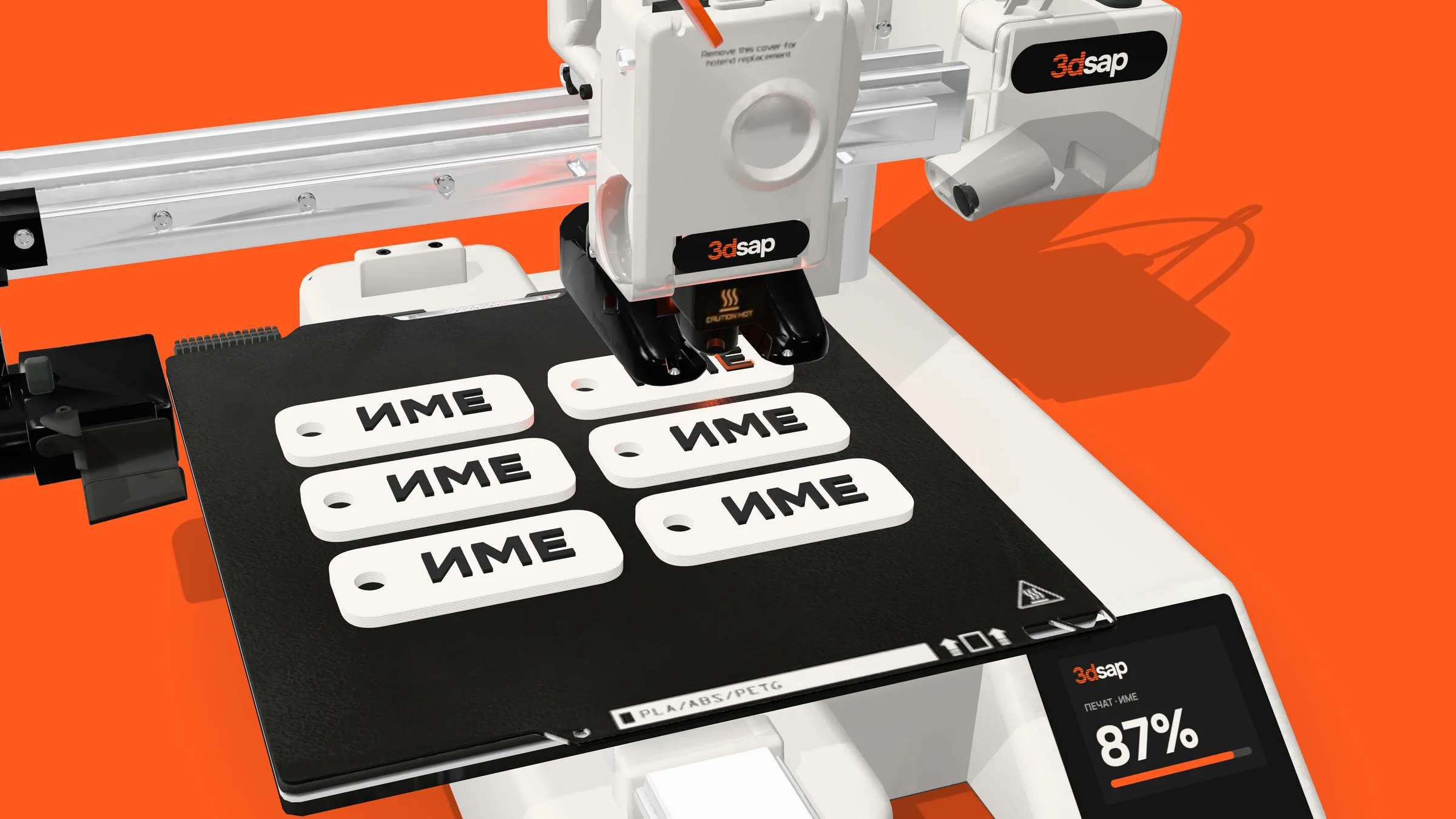
A name in Cyrillic, up to 4 colors in one piece. How the A1 mini with the AMS lite switches colors, which material lasts outdoors and in a car, and what to send us for a quote.
Read the article
A printer works from a 3D file, not a photo. Three ways to get one for your broken part: find a ready-made model, design a simple one in free software or hire a designer, plus what to measure so it fits.
Read the article