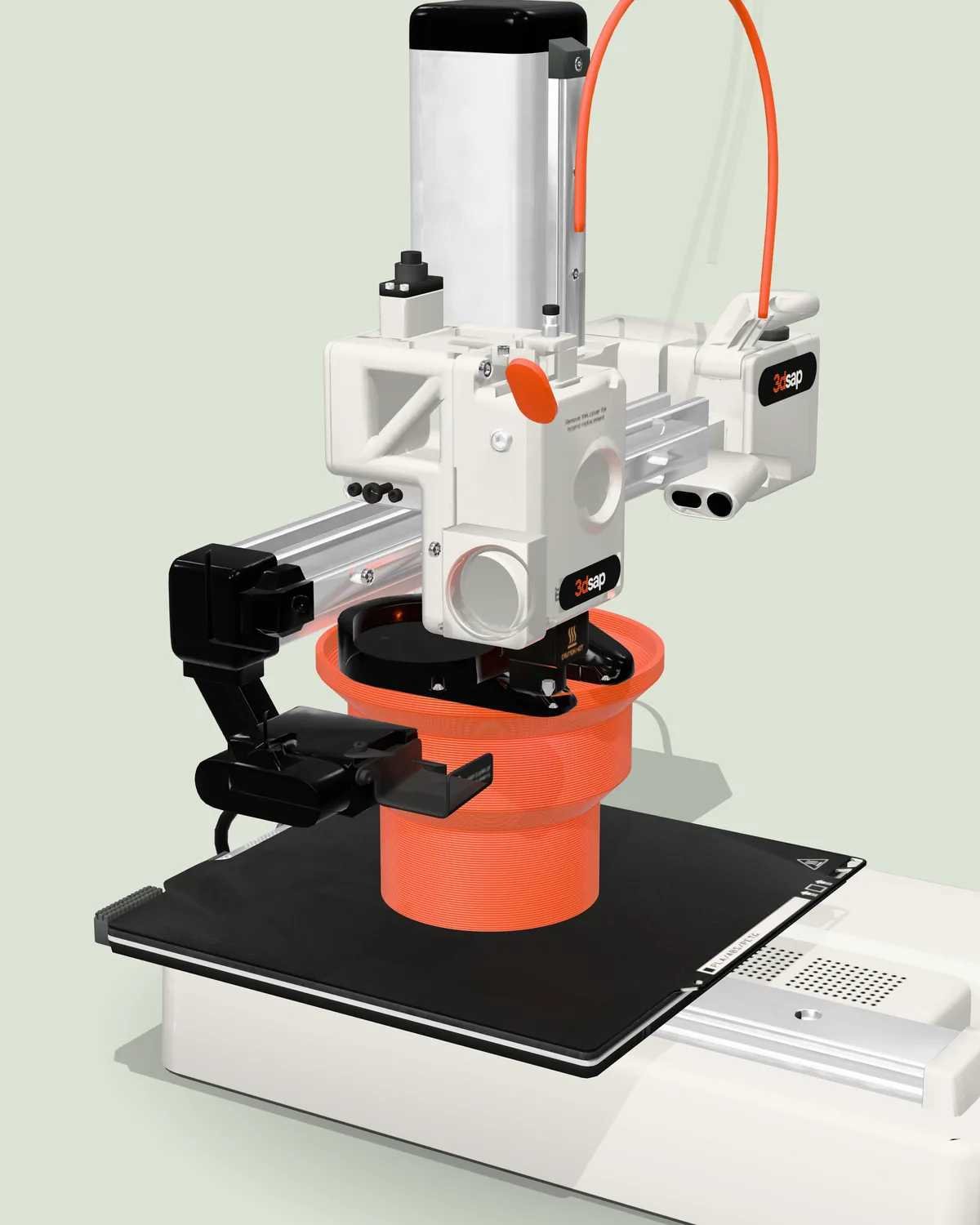
How a 3D printer works: one vase from file to last layer
The slicer sets the walls and layers, and the printer lays them down line by line. Whether a 3D printed vase holds water depends mostly on the walls and the seam.
Read the article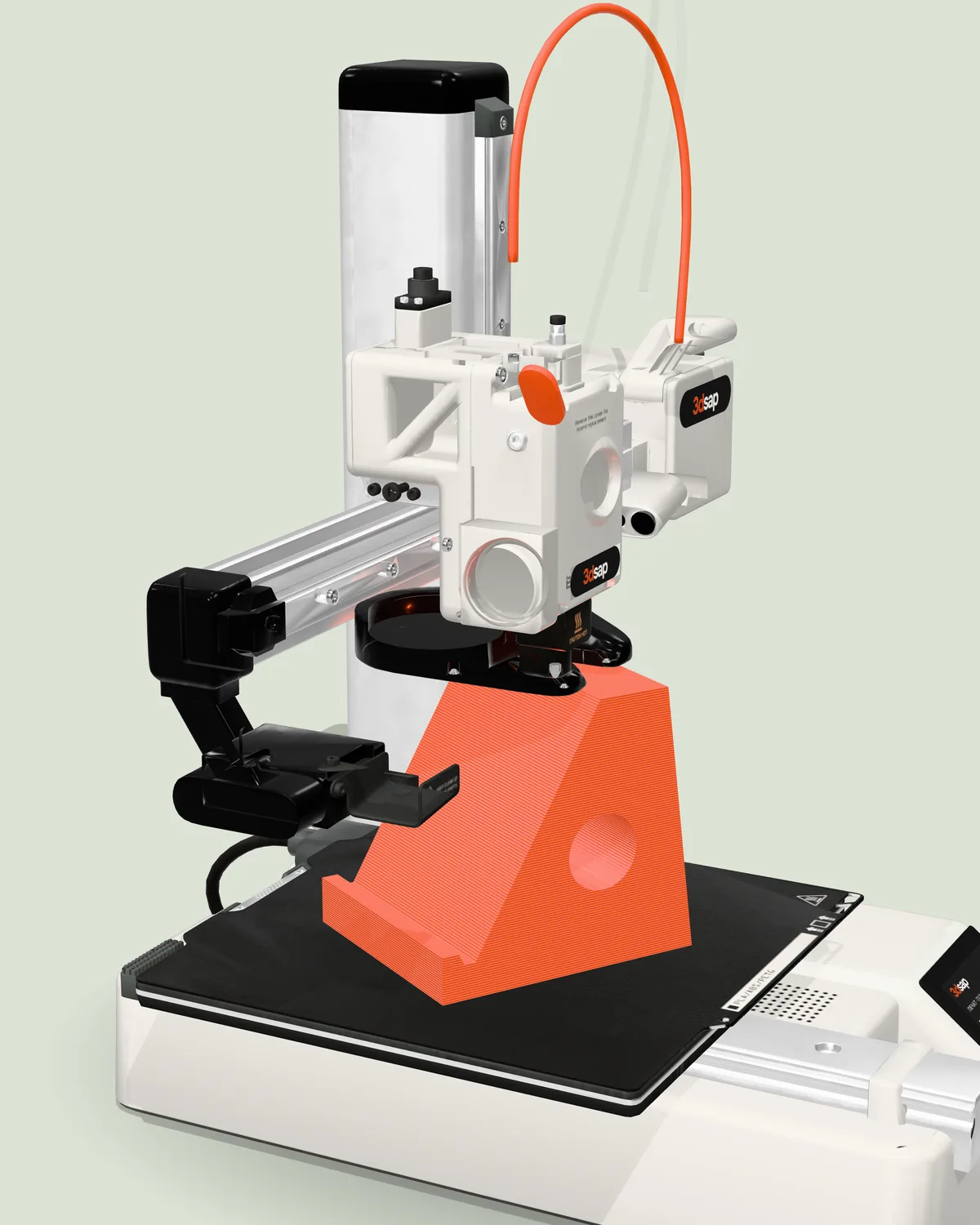
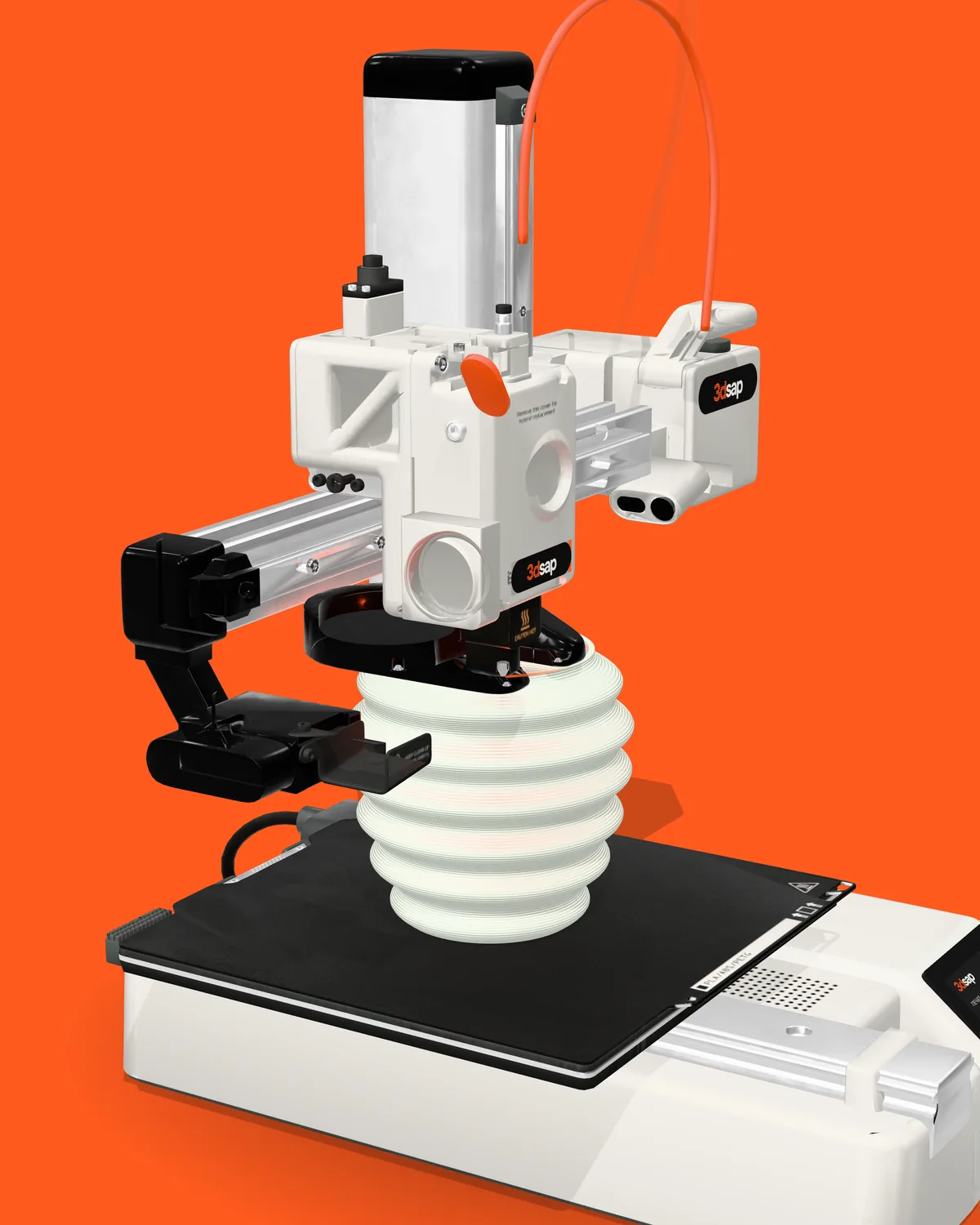
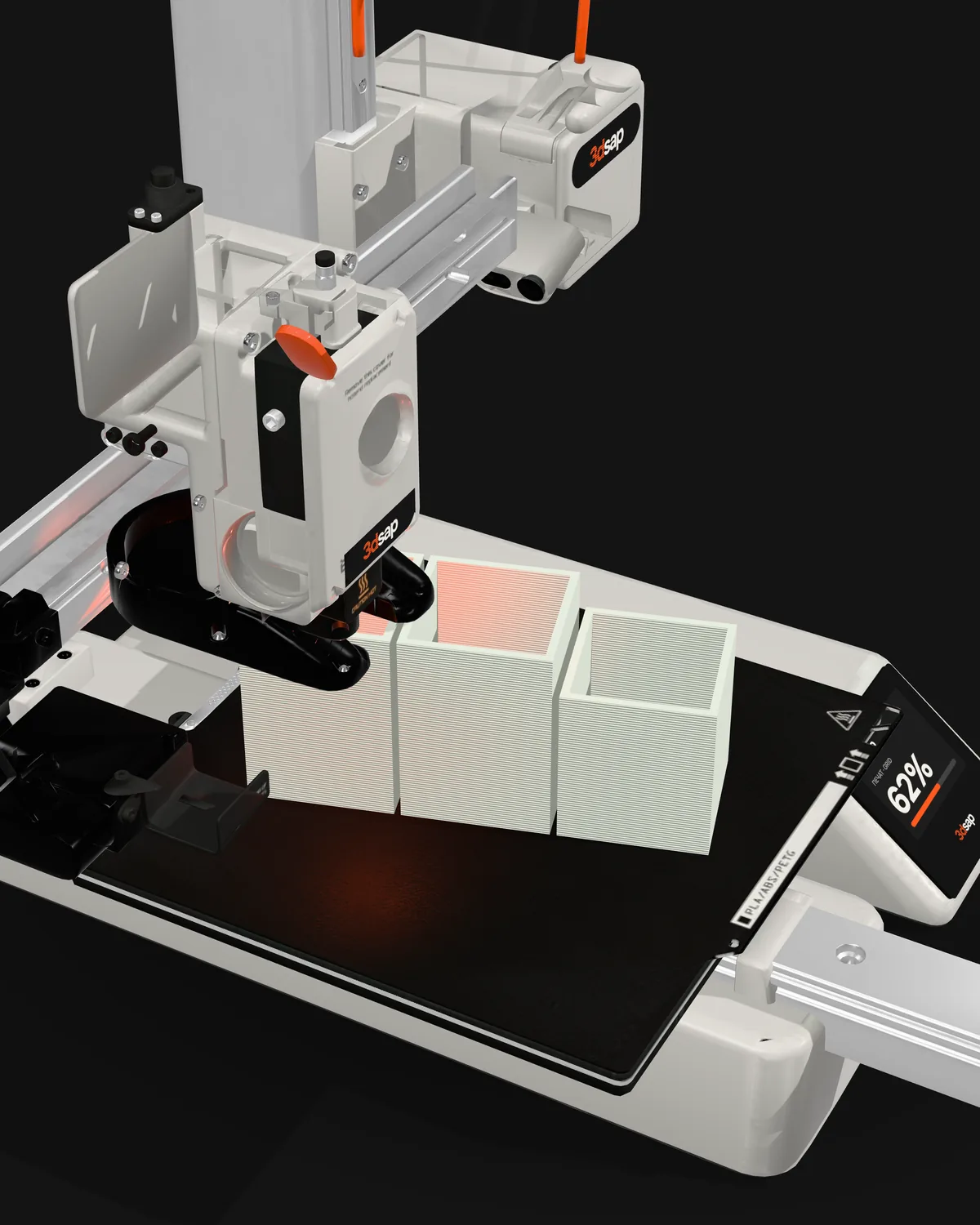
Plastic is a small part of what a 3D print costs. With published figures: what print hours, supports, color changes and manual work add, and how to get an exact quote for your file.
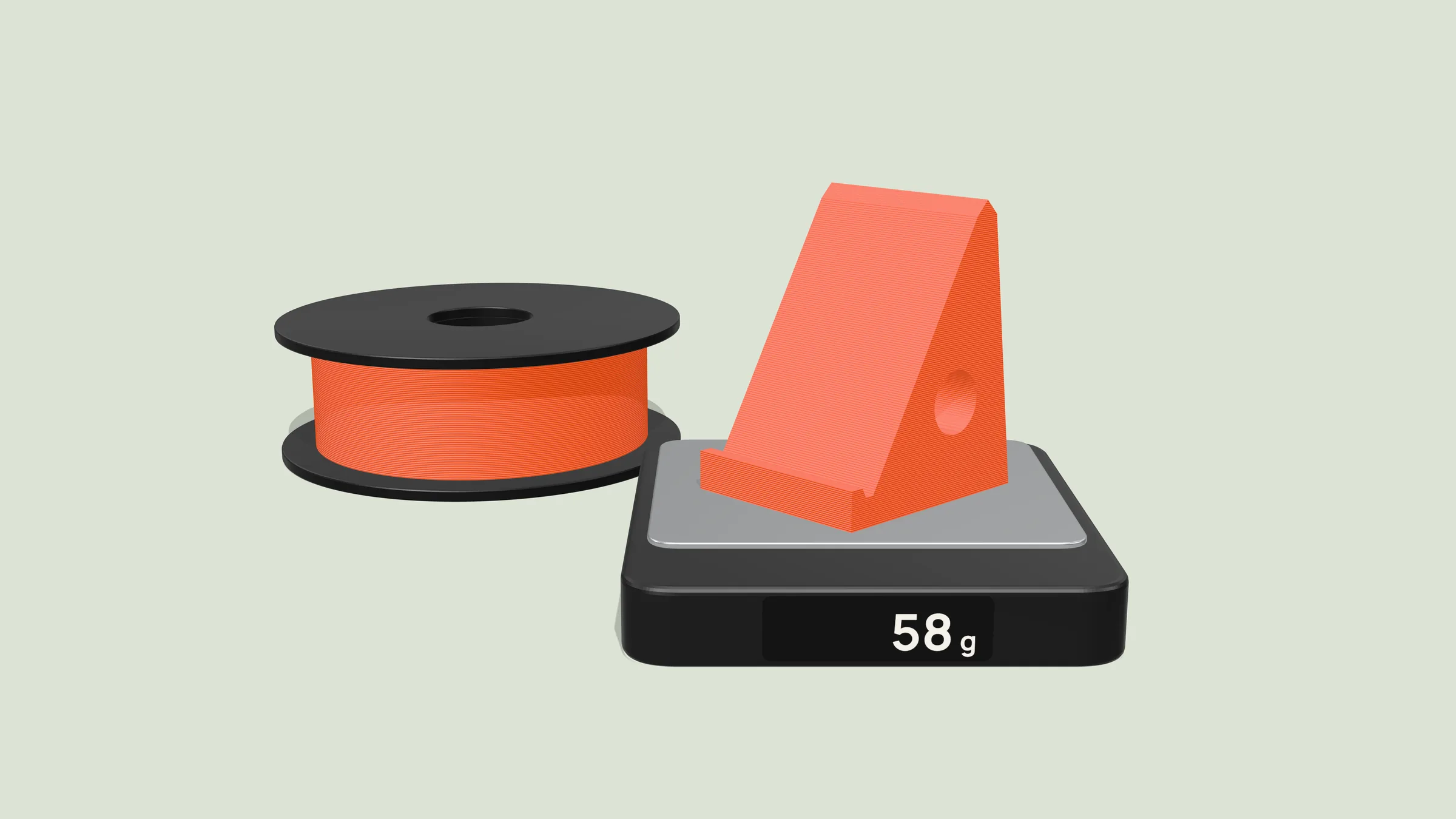
In most 3D printing cost breakdowns, plastic is a small part: printer hours, supports, color changes and manual finishing count for more. Below you’ll find each factor with published figures, what makes a print cheaper, and how to get an exact price for your file.
Filament is the plastic strand the printer builds the object from. As of October 2026, the European online store of Bambu Lab, which makes our printers, sells 1 kg of PLA Basic and 1 kg of PETG HF at the same price: 16.99 € without a spool and 19.99 € with one. Buy 10 rolls or more and the price per roll drops by 40%.
So a gram of plastic costs about 1 to 2 cents: a 50 g object holds about 0.50 to 1 € worth of filament. Since both materials cost the same, choosing between PLA and PETG depends on where the object will live, not on the price of the spool.
Electricity is a small cost too. In Igor’s Lab’s test , the Bambu Lab A1 mini drew about 85 W while printing PLA, so 4 hours of printing come to about a third of a kilowatt-hour.
Most of the price is labor, not filament, says Makerverse. In its example of a small nylon bracket printed on an FDM printer, material is about 19% of the cost, electricity about 1%, machine wear about 4%, and the labor of setup, monitoring and finishing about 76%.
That is why, when some services quote 3D printing prices per gram or per cubic centimeter, the rate is higher than the price of the filament itself: it includes the plastic, the hours and the labor.
The slicer, the program that cuts the 3D model into layers, works out how many grams and hours an object takes for that exact file and settings. How the printer stacks the layersis shown with one vase in a separate post.
Height decides how many layers there will be. We print with 0.2 mm layers, so every 2 cm of height is 100 layers. That is why a tall, thin object can take longer to print than a flat one of the same weight.
Thinner layers give a smoother surface but raise the price, because the print takes longer, says the 3D printing service Stratasys Direct.
Cost grows faster than size: double all three dimensions of an object and its volume grows 8 times. Grams and hours grow less than the volume, because the inside is not solid, but they still grow several times over.
Inside, an object is usually filled with a grid called infill. According to Prusa’s knowledge base , most models can be printed with 10 to 15% infill, rarely need more than 30%, and get their strength mostly from the walls. Sparse infill uses less plastic and prints faster than solid infill.
A printer can’t lay plastic in midair. Under overhanging parts it builds temporary supports: they use filament, lengthen the print and are then removed by hand, often with some sanding too.
A wall that leans no more than about 45° from vertical usually holds itself up, says Stratasys. An object that lies on a large flat face, not on a narrow edge or a rounded base, also needs fewer supports.
We print multicolor objects on a Bambu Lab A1 mini with an AMS lite: a unit for four spools that feeds the filament to a single nozzle. A1 series printers work with only one AMS lite, so one object can have 4 colors at most, says Bambu Lab.
At every change the printer cuts the filament, pulls it back, feeds the next one and pushes plastic through the nozzle until the color comes out clean. The flushed plastic is thrown away. Bambu Lab’s own guide says multicolor prints tend to be very costly in both time and material.
The layout of the colors decides how much is wasted. In a Bambu Lab example, when a part’s colors are stacked by height, the printer changes color 3 times and throws away 10 g. Laid on its side, the same part has all four colors in every layer: the waste is 22 times greater and the print takes 11 times as long. Going from a dark color to a light one flushes more plastic than going from light to dark.
Several objects on one plate only save filament if their colors change at the same heights. In another Bambu Lab example, three different traffic cones with stripes at different heights waste 22 g in total printed separately and 72 g on one plate. The numbers for a multicolor name keychain are in a separate post.
After printing, the supports come off and the edges are cleaned. If the surface has to be smooth or coated, there is more manual work and the price goes up, says Stratasys.
Without a 3D model there is nothing to print. For many objects a ready-made model already exists. If not, someone has to design it first: you, in a free CAD program, or a designer you hire. That is separate work before printing, and you send us the finished file. Where to get a 3D modelis covered in our post on 3D printing parts.
Quantity matters too: preparing a print (checking the file, settings, the start) is done once for the whole plate, and a plate often fits several identical pieces, so that work is spread across them.
The exact amount depends on the specific model, so we need the file itself: STL, OBJ, 3MF or STEP. Ask for an exact price on the Contact page: pick the topic “Custom prints” and attach the file. For a catalog product, use the request form on its page: you choose the material and color there.
In your message, also tell us:
This is a request, not a purchase
You don’t register and you pay nothing now. You can ask for just one piece, too. Within one working day we write back with the price, timing, delivery and how to pay. A quote for printing your own model is valid for 14 days. Once you confirm, making the piece usually takes 1 to 2 days: we print on two printers, and if one is free we start the same day. A bigger or more complex piece takes longer.
Online calculators give an estimate from volume or grams, while the exact numbers come from the slicer for that specific file. There is no calculator on our site: send the file and the price is in our reply.
The filament itself costs about 1 to 2 cents per gram at Bambu Lab’s prices as of October 2026. Services that quote a 3D printing price per gram fold the hours and the labor into it, so their rate is higher. You get the exact price for your piece in our reply to your request.
At Bambu Lab, no: a kilogram of PLA Basic and a kilogram of PETG HF cost the same. The difference is where they last: PETG handles water and sun much longer than PLA, while PLA is for indoors, because it softens around 55 °C.
Because most of the price is printer hours and manual work, not plastic: in the Makerverse example, material is about 19% of the cost. If you need a lot of prints, we work out whether your own printer pays off in our post on how much a 3D printer costs.
No. A request is not a purchase: you pay only after you accept the quote, and our reply says how.
The amount is in our reply to your request, together with the price of the object. We ship by courier anywhere in Bulgaria, and in Sofia we can also bring it ourselves.
Products
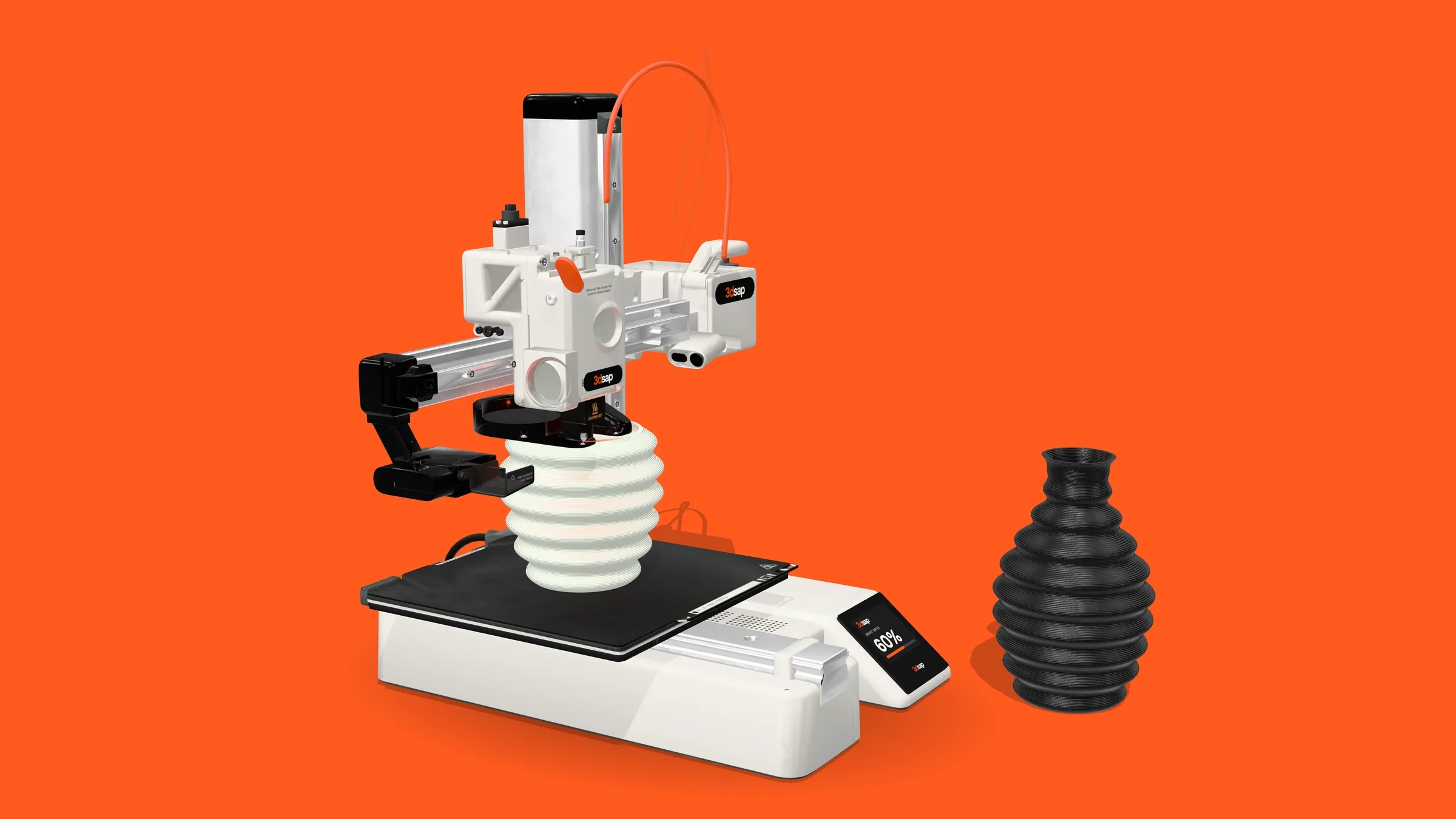
The slicer sets the walls and layers, and the printer lays them down line by line. Whether a 3D printed vase holds water depends mostly on the walls and the seam.
Read the article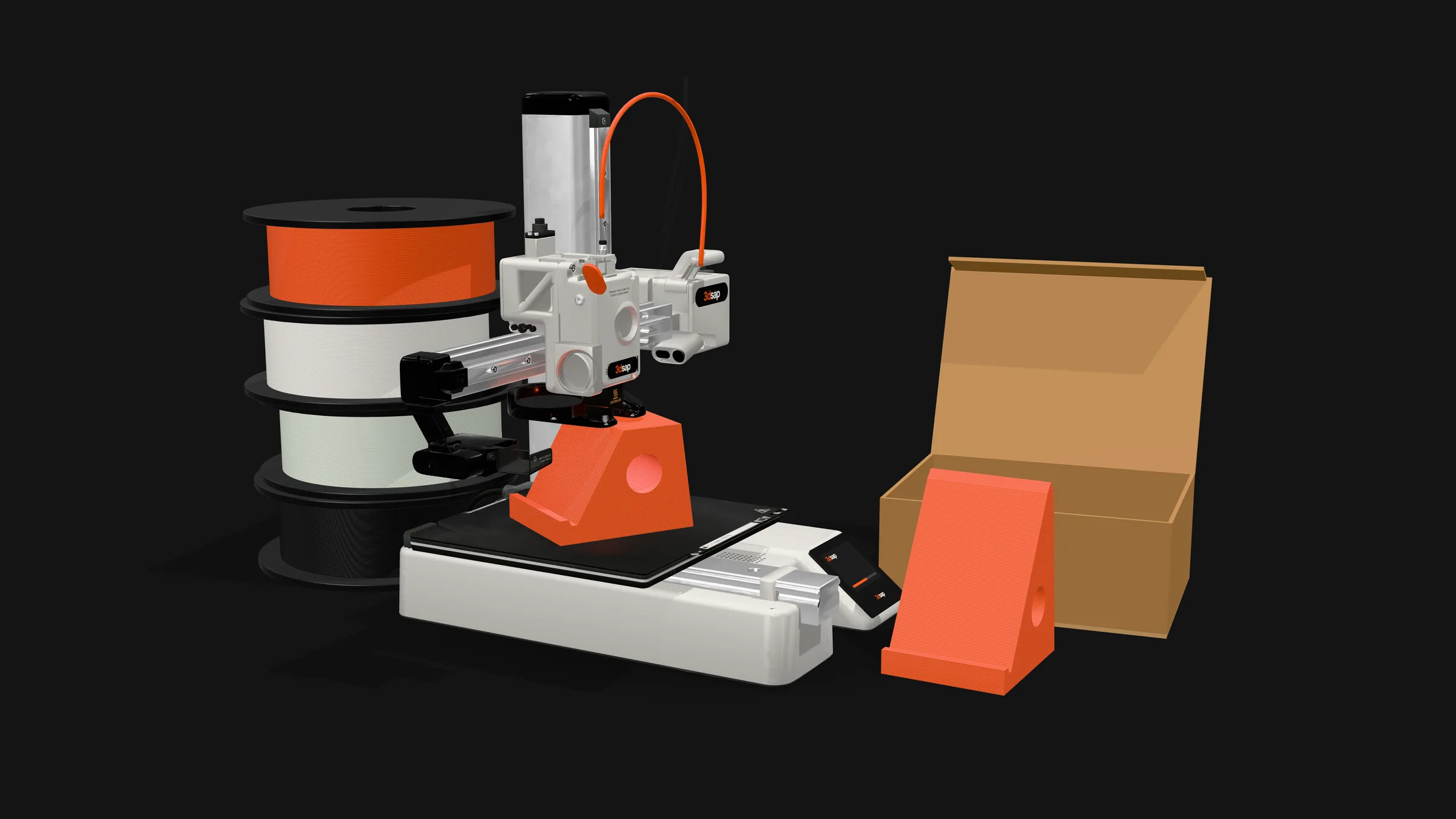
Euro prices for the two printers we print on, what filament, power and upkeep cost, and when it is simpler to order the object itself.
Read the article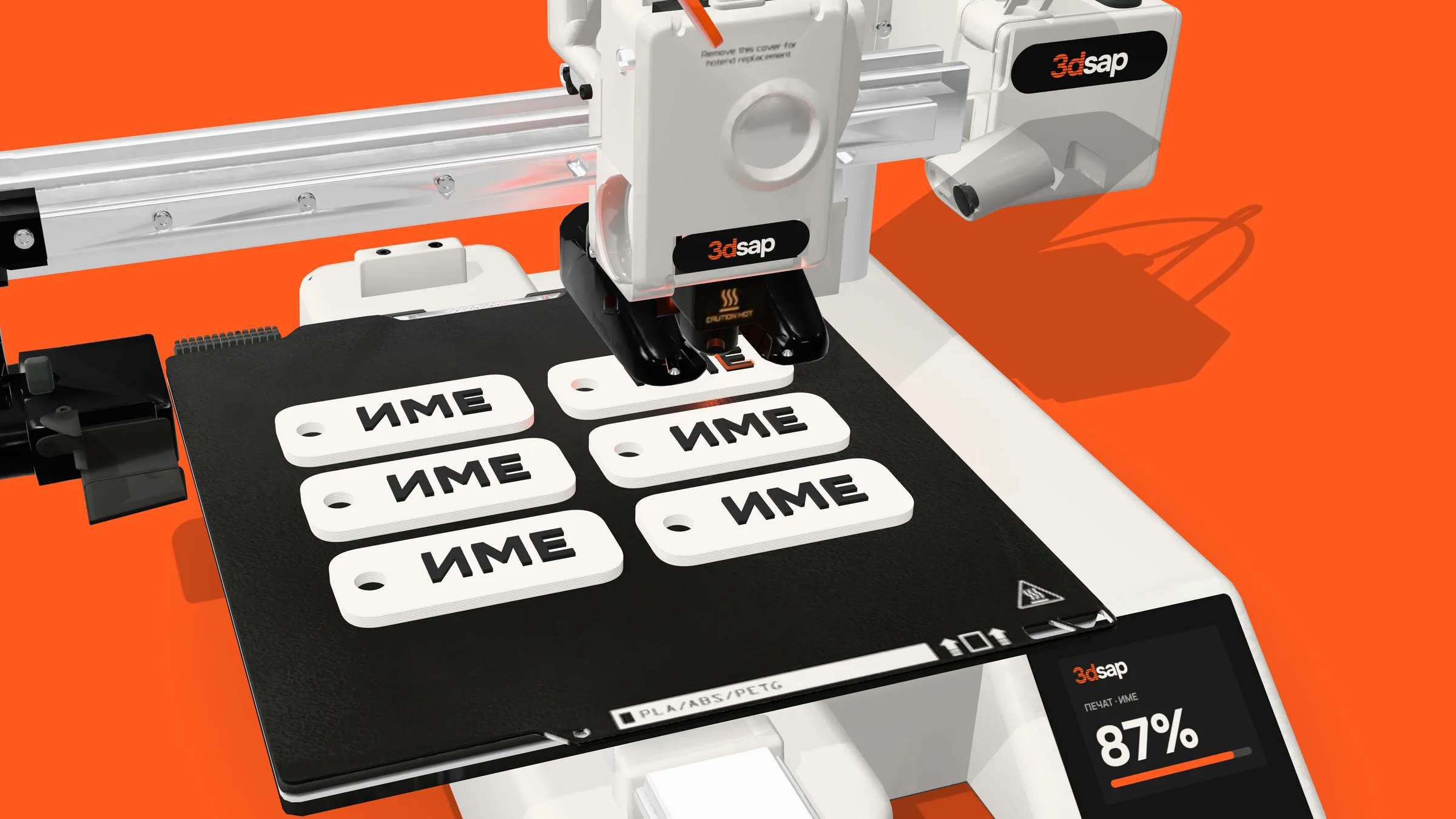
A name in Cyrillic, up to 4 colors in one piece. How the A1 mini with the AMS lite switches colors, which material lasts outdoors and in a car, and what to send us for a quote.
Read the article